OPENING LINES puts playwrights centre stage by diving into the world of new writing and original work. Each interview explores the creative process, the challenges and triumphs of developing new ideas and work for the stage, why new voices and stories are essential to the future of theatre and what the industry is doing to nurture and support new writing.
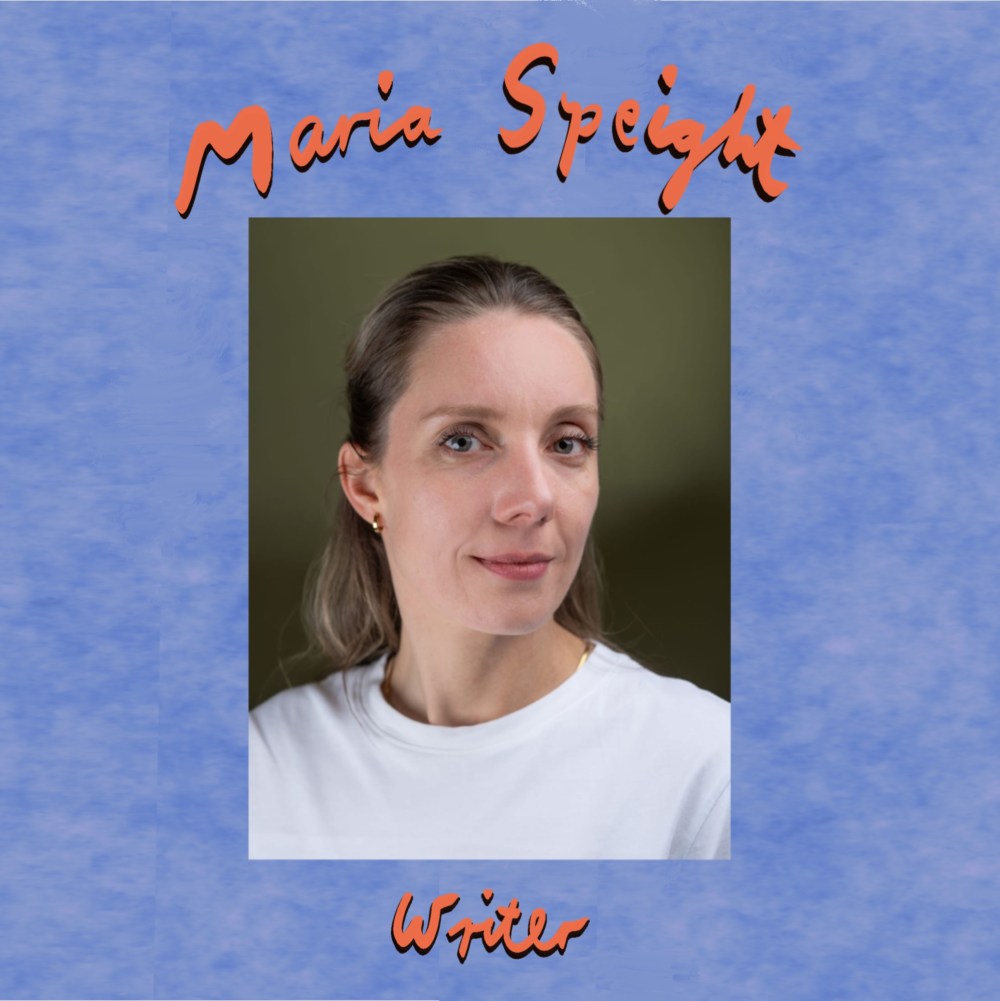
My second interview is with the fabulous writer, Maria Speight. We spoke about her new play, MAYBE YOU SHOULD KNOW, the inspirations behind it, what it means to bring it to Camden Fringe, the kinds of stories that resonate on stage and how theatre explores complex themes and lived experiences, as well as her perspective on the future of new writing and the industry’s commitment to championing it.
What inspired you to write MAYBE YOU SHOULD KNOW?
Philip Larkin famously once said in a poem, “They f**k you up, your mum and dad. They may not mean to, but they do.” I’ve always been fascinated by the tension held by grown up children as we are mature enough to express compassion for our parents, who are just fallible human beings like the rest of us, but also hurt enough to have wanted better parenting. So it was always a theme I wanted to write about.
The characters of Julie and Daniel (it’s a two-hander, so the actors have a lot of lines to learn!) came up in one of my very first playwright classes during a music-listening exercise. Music also features in the play attached to the two characters.
What does bringing a show to Camden Fringe mean to you? Is this your first time or have you been before?
I only came to writing plays in the last 12 months, so I can’t quite believe we’ll be on at the Camden Fringe in just a few weeks. I was at the stage in my life where I was just saying “yes” to things and (while I have nightmares about empty seats!) there has been so much support from Leo Basica and Sharon Williams at Barons Court Theatre that I feel it’s a safe space to take this risk.
Last year I remember looking at the Camden Fringe programme not thinking we’d be in it this year – working with pretty much the same team has been a dream.
Were there any moments during the writing process that surprised you?
As someone who likes tidiness and closure, I’ve found it difficult to accept that I’m never going to be 100% happy with my writing or that it’s “finished”. You always want to learn and develop as a person and as a creative, so it surprised me that I’d be looking at a piece of my work and thinking “I would definitely do it a different way if I was doing it now”.
But maybe that’s also a lesson for life, that things don’t have to be perfect to be worthy of a place in your life. And there’s always the next play…
As the writer and creator, how did it feel to bring your own words and vision to life on stage?
This never gets old for me. I get chills every time I hear someone bring my words to life, even at a scratch or read through. I look at actors and directors and think “you are incredible, you are making a world real that started off in my imagination” and the way they commit to it and lean their weight into it is spine tingling.
I also absolutely love working with the cast, Nadia Bond and Aidan Parsons, and our director, Adam Gower, as they’ve made it such a supportive and collaborative process in giving notes to develop the play.
Did you learn or discover anything about the show during rehearsals that you didn’t expect to?
The character of Daniel has a US accent, and Aidan was struggling with a line, so I offered to change the words around to make it easier to deliver. I didn’t realise I’d written something a little bit naughty until the director asked me if he felt the character of Julie, an older woman, would get it. I was all blank – “get what?” They video called me from the rehearsal room to see my embarrassed face and make fun of me.
I’m pretty mortified. Does that count?
How do you want audiences to think and feel about your show?
Everyone who will see the show will have been affected by their mother – even if that mother was absent from their lives, because even the absence of a mother has huge consequences. I’d like them to ask themselves if anything in the play resonated with them and why. If there are parents in the audience, I hope they will also think about their parenting, even to children who are now grown up.
After a rehearsed read, an audience member said they were going home to call their mum. Parent relationships can be complex. This isn’t about “just forgive and forget” but instead learning something about these relationships.
If you could ask your audience one question after the show, what would it be?
What questions do you still have? I don’t want to answer every question that comes up in my stories – I think ambiguity and space to have personal reflection makes theatre a great spectator’s sport. But I wouldn’t want there to be huge gaps of following the story once the curtain drops. There’s a lot packed into the hour so we’ll see!
Do you see yourself continuing to explore similar themes and topics in your future work?
I went through a stage of writing, it seemed, only pieces about mothers or about grief, as I had recently lost a sister. I’m grateful that writing – even the things which nobody else reads or performs – has given me a mechanism to express and explore these massive themes.
Writing a play can be therapeutic but it isn’t therapy and there still needs to be an entertainment factor as well as a universal story. I have an idea of what I’ll write next and it isn’t about mothers (so far!)
Do the works of other playwrights, writers or theatre-makers influence your own writing? Are there specific writers or plays that have shaped your approach to storytelling?
I massively feel that I constantly need to catch up on other people’s art because I find so little time to read, watch things or go to the theatre. I tell everyone I know that my favourite new play is Till the Stars Come Down by Beth Steel because I am obsessed with her loops of language, sounds of speech and the incessant dialogue in the play.
I wrote a short play set in Greater Manchester called Ruby & Pearl which 100% chased after this use of language and pace. My writing tutor said, “in plays like this, you just want to exist in that world of back-and-forth banter and endless cups of tea forever”. I’d love to do a full-length piece like that. Having grown up in the North West, the rich colloquialisms and proud accents are so beautiful to write to.
Do you feel that the theatre world is doing enough to support and nurture new writing? If not, what changes would you like to see?
I woke up one day and decided I wanted to write plays and I wanted to start sending them to scratch nights and rehearsed reads, and I can’t think of many pursuits where you get the space and trust to try out your work in such an immediate and low stakes way. Sometimes I’m so blown away by the support and care of theatre companies, facilitators and audiences, that I have to go, “no, but really, how can I make it better?” because there’s so much love in those rooms.
But making a career out of new writing still feels very far away – I went to a playwright’s day in Brighton and career playwrights were telling the room, “we don’t know what to tell you, we can’t make a living like this”. I’m lucky I have another job with consistent income, and right now I’m in it for the love of the game (nobody moves to London with the intent to become a failed actor).
I’d like to see more straight forward and dedicated funding for writers – we often don’t have large networks of actors, producers, technicians, etc. If I could get trust in the form of money, I’d be able to access the collaborators I’d need to make something happen, but I couldn’t write a funding pitch with a fully formed company.
Isn’t that what success in the arts unfortunately usually boils down to? I think we have to make it happen for ourselves in some way, anyway, until that day.
Maria Speight was born in Bristol but grew up in Lancashire and moved to London in 2009 to attend drama school. Always one to attempt the 9 to 5 with a creative hustle, she taught ballet and wrote fiction and journalism before landing into writing plays in 2024. Her first play Maybe You Should Know will debut at the Camden Fringe this August. She also wrote and performed the one-woman short play Skinfluencer at Dorchester Arts in May 2025.
Catch MAYBE YOU SHOULD KNOW at the Barons Court Theatre during Camden Fringe on 22nd and 24th August. Tickets available here.
MAYBE YOU SHOULD KNOW – Daniel and Julie are people from two different generations, cultures and backgrounds, thrown together as they wrestle with the profound question of what do we owe to our mothers, and what do they owe to the sons they raise. This poignant play balances humour with emotive drama as it delves into the weight of generational trauma, set against the backdrop of Homes for Ukraine, and is a must-see for anyone who has ever experienced the complexities of mother-child relationships.

 the theatre gal