Welcome back to OPENING LINES, the interview series that puts playwrights centre stage by diving into the world of new writing and original work. Each interview explores the creative process, the challenges and triumphs of developing new ideas and work for the stage, why new voices and stories are essential to the future of theatre and what the industry is doing to nurture and support new writing.
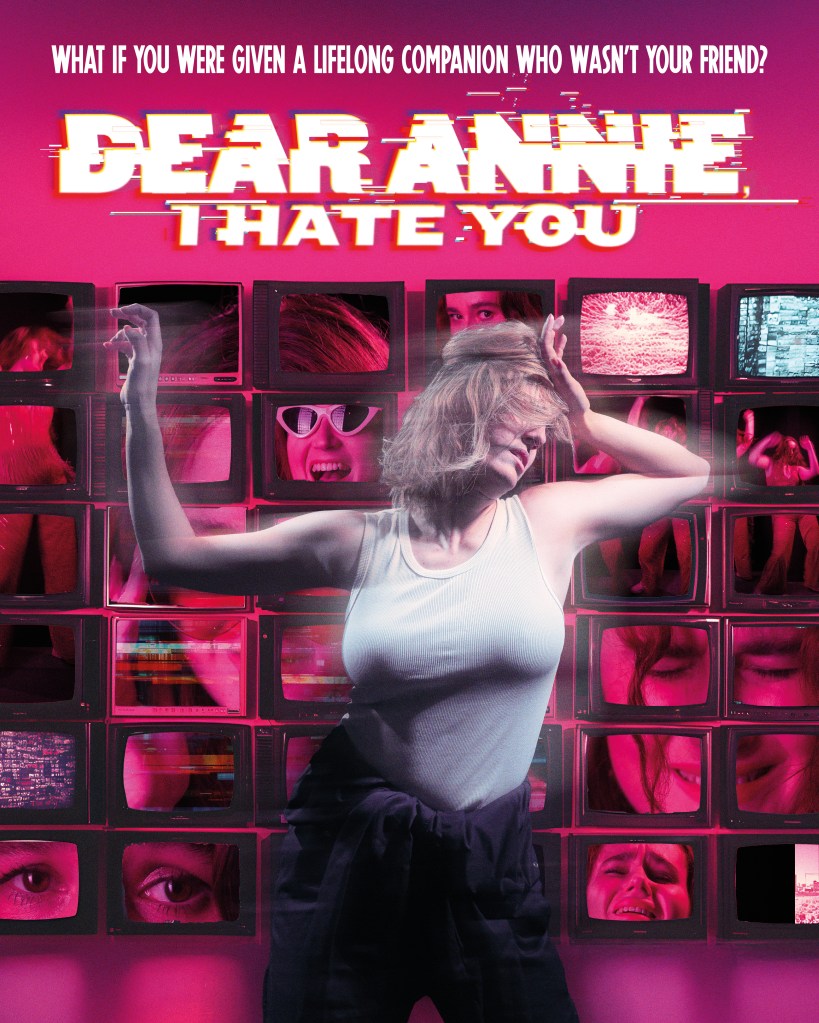
With Edinburgh Fringe just around the corner (woohoo!) I had the absolute pleasure of chatting to the amazing Sam Ipema, writer of DEAR ANNIE, I HATE YOU, which is running from 31st July – 25th August at the Pleasance Courtyard (Pleasance Two). Tickets available here.
Introducing Sam Ipema –
Sam Ipema is a playwright, director and performer. In 2023, she founded the production company Wild Geese Productions to begin creating her own and other’s work, and help support the endeavours of early-career artists.
Her play, DEAR ANNIE, I HATE YOU, premiered as her theatrical debut at Edinburgh Fringe in August 2024 in ZOO Venues and was a sold-out triumph, winning Sinner’s #1 Top Pick of The Fringe, ‘Best New Writing’ (Stagey Place), ‘Best Multi-Media Show’ (Stagey Place) and shortlisted for BBC’s Popcorn Award. Hot off a hit run at London’s Riverside Studios, DEAR ANNIE, I HATE YOU returns to Edinburgh for a second time telling the true story of Sam Ipema’s diagnosis with a brain aneurysm. Brought to life by Wild Geese Productions, in association HFH Productions, with sound design from Olivier-nominated Dan Balfour, the show is a visceral multi-media exploration of coming to terms with the possibility of death at the age of 20. DEAR ANNIE, I HATE YOU looks to pay homage to different types of disabilities – both seen and unseen.
What inspired you to write DEAR ANNIE, I HATE YOU for Edinburgh Fringe?
Honestly, the Edinburgh Fringe itself! It just felt like the perfect place to premiere my very quirky idea about bringing a brain aneurysm to life on stage, and the only place I really felt I had both the courage and the opportunity to do so!
What does bringing a show to Edinburgh Fringe mean to you? Is this your first time or have you been before?
Everything. It’ll be my second time and returning with a very new iteration of the same show, so I’m very excited to see the new and old audience reception to this one. It’s scary, terrifying and electrifying. Which is all you can really ever ask for as an artist creating something.
Were there any moments during the writing process that surprised you?
Maaaany. So many. It’s a really hard process to not only write about the truth of your life, but to attempt to turn it into something very present and very universal. It’s a struggle every day and it shocks me every day the twists and turns it ends up taking. I don’t know what else to say – sometimes I wish it were a little more normal process I suppose!
As the writer and creator, how did it feel to bring your own words and vision to life on stage?
Great question, thanks for asking. I feel….excited and terrified in a way that makes me unsure whether I want to run a marathon or throw up. There is no greater feeling than bringing your vision of something to life on a stage and sharing it with a receptive audience. And yet, there is also no worse nor more terrifying feeling. So… yeah. Many feelings.
Did you learn or discover anything about the show during rehearsals that you didn’t expect to?
Oh every time. Like I said, it’s really hard to write about your life – I think even harder to perform it. I’ve been trained very classically as an actor, so it can be tough sometimes to look at the script and be like “hey, this is me! Wait, no it’s not. Wait, am I playing a character? Or is it just a version of me?” My poor directors get very lost in the sauce with me on it. All part of the fun adventure.

How do you want audiences to think and feel about your show?
First and foremost – I just want them to feel. How or what is up to them. But I want them to feel cracked open by it and I suppose to leave the theatre thinking: how on earth did I just have a great time watching that and how on earth do I want to change my life because of it. I suppose those are rather ambitious aims… but you asked! If this isn’t too crude to say, I kind of want them to leave just thinking “Holy shit. What on earth did I just watch? I need to immediately go again.”
If you could ask your audience one question after the show, what would it be?
“What did it make you feel?”
Do you see yourself continuing to explore similar themes and topics in your future work?
Hopefully not more topics about brain trauma and brain surgery. No thank you, I’ve had my fill and think I need to move on for my own good and own life really. But – do I plan on making my work just as absurd, questioning and visceral? Absolutely. You can count on that.
Do the works of other playwrights, writers or theatre-makers influence your own writing? Are there specific writers or plays that have shaped your approach to storytelling?
Hm. Honestly the playwrights that affect me most are the dead ones. Is that okay to say? Too late, I did. I have an obsession for Greek Tragedy a bit I think because those plays just really attack the question. They say “here’s a problem we have in society, let’s not just talk about it, let’s really look at it.” I think we need more of that. That said- the contemporary playwright I love that I think does this is Duncan MacMillan. Don’t tell him, but I think he’s fabulous. Or do. He should definitely know.
Do you feel that the theatre world is doing enough to support and nurture new writing? If not, what changes would you like to see?
No. It is not. Are there pockets of places doing an excellent job? Absolutely yes. And Fringe is one of the places where it’s still able to be successfully done. But no.
I’d like to see a completely new way to how we approach integration of talent. I’m very very very tired of this schematic, hierarchical approach to new talent being able to get their foot in the door. That their achievements and worth and ability as a writer is only validated by their ability to get shortlisted or win in some grant prize or competition. I understand that these schemes are helpful, but they’re inherently tailored to people with an advantage or a level of success or training already. So there need to be other schemes for development. But it takes change and accountability from the top and middle down. And most of all, it takes willingness for risk. We forget that’s what the art is all about while we chase all the big shiny business-ey prospects of art. And I want to see that: more risk.


 the theatre gal