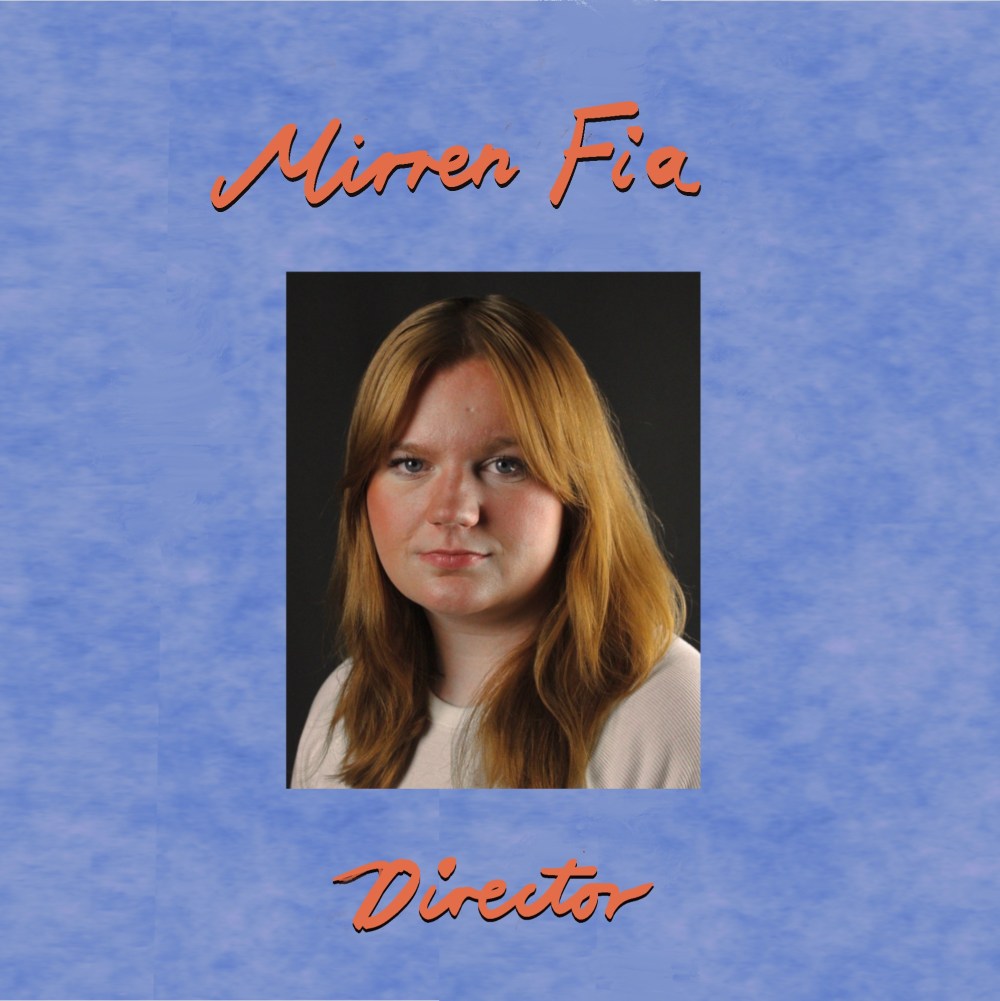
Welcome back to OPENING LINES where I’m switching things up – this week I chatted to the lovely Mirren Fia, a director (not a writer!) who’s adapted SEX AND GOD by Linda McLean. Running during Edinburgh Fringe at Stephenson Theatre at theSpace @ Surgeons’ Hall til 23rd Aug. Tickets available here.
Step into the captivating world of this powerful and provocative play by Linda McLean. This unflinching exploration delves into the complexities of faith, desire and human connection. Through gripping performances and thought-provoking dialogue, SEX AND GOD challenges the boundaries of love, religion and identity. Don’t miss this unforgettable journey into the heart of what it means to be a woman, in every version of society.
What inspired you to direct and adapt SEX AND GOD?
This project started originally as a piece for our BA (Hons) final performance showcase. The five of us had decided to work together and as a cast of all women, it seemed rather fitting for us to focus on feminist theatre – that’s when I found Linda McLean’s work. She focuses a lot on Scottish societal issues and this play really encapsulated what we as a company wanted to promote. The play was originally published in 2012 and now in 2025 we have over a decade of life and struggle to add to this piece of work which inherently lead to changing and modernising this play.
What does bringing a show to Edinburgh Fringe mean to you? Is this your first time or have you been before?
This is all of our first times at the Edinburgh Fringe and it means the world to us to have this experience but I am also so incredibly proud of all the hard work that my cast have put in to create this opportunity for ourselves. It has not been a walk in the park and we have had to do a lot of self advocacy and still we made it here to this amazing festival with a strong and impactful piece of work that we get to claim.
Were there any moments during the directing and adaptation process that surprised you?
I think that the biggest surprise for me in this was the differences in visions that I had for the piece, in contrast with the original production. We have made a very conscious effort to add to the stylised aspects of this play and made the choice that these 4 characters will not interact on stage with each other at any point. They don’t talk to each other or even look at each other until the very end of the piece which has added a whole other layer of independence and isolation to each character.
As the director, how did it feel to bring your vision to life on stage?
This has been so surreal and being able to bring my ideas and creativity to a real professional space for this first time is indescribable. To be honest it still doesn’t feel real.
Did you learn or discover anything about the show during rehearsals that you didn’t expect to?
The way that the show is written, there are many different plot lines that are all weaving through one another and we are always finding new bits of information and meaning. My favorite part that we have interpreted from the piece is that it’s timed right that each of the characters could be each others mother. It’s not in the script anywhere but we’ve really ran with the symbolism of that and it’s changed how the characters talk about their children in each moment.
How do you want audiences to think and feel about your show?
This is a heavy piece and I hope going in that audiences are prepared for all the difficult themes and issues in it, but I hope coming out of the film they see the struggles and suffering of women throughout history and can realise that these issues are still prevalent today. On that note, I also hope that they can feel a sense of womanhood in this piece and understand the strength in coming together.
If you could ask your audience one question after the show, what would it be?
I think that I would ask which of the four women was their favorite character. I think that they are all so different and who you choose would really say a lot about your personality and probably your own personal struggles. I believe that would open up a great conversation about the issues in this piece and that is our ultimate goal.
Do you see yourself continuing to explore similar themes and topics in your future work?
Yes. I think now as an established company of all women, we definitely want to focus on feminism throughout our different pieces of work as we hopefully create them in the future.
Do the works of other playwrights, writers, theatre-makers or directors influence you? Are there specific writers or plays that have shaped your approach to storytelling?
I think that the author of this play has a very distinct form of writing and it lends itself well to this non-naturalistic style and I enjoy working with pieces like that. Another similar author is David Harrower. The play BLACKBIRD is again another heavy play but the way the lines are written, overlapped and trailed off creates this slight hurdle for actors, and once they are over that it can bring many more ways of direction into a piece.
Do you feel that the theatre world is doing enough to support and nurture new writing? If not, what changes would you like to see?
As a company we did not choose to perform this year with a piece of new writing for many reasons, mostly that we had performed this together already as our end of year project and wanted to develop it further. We hope to bring new writing to the Fringe next year, however, we would definitely need to get funding. It is such an expensive experience to create, research, develop and sell a new show without any backing. I definitely think there is a positive attitude towards new writing, however, I think that there needs to be more guidance and financial support for these shows in order for them to thrive.
 the theatre gal